

Where the Sonoran Desert Meets the Sea of Cortez
Tessoro sits between the Sea of Cortez and Estero Morúa, surrounded by one of Puerto Peñasco's most distinctive natural settings. Discover estuary wildlife, extraordinary tides, sea turtle conservation, seasonal whale watching and the environmental story of the northern Gulf.
Nature Is Part of the Tessoro Experience
At the eastern end of Las Conchas, desert, beach, tidal wetlands and marine habitat come together. From your stay at Tessoro, you are positioned to experience both sides of Puerto Peñasco's natural world: the open Sea of Cortez and the remarkable estuary landscape of Estero Morúa just behind the resort.
Estero Morúa
Estero Morúa lies immediately behind Tessoro and is one of the defining features of the resort's location. Its tidal flats, channels and wetlands support shorebirds, marine life and the traditional oyster cultivation that has long been part of the Puerto Peñasco region.
The estuary changes constantly with the tides. At different times of day, broad flats may be exposed before disappearing again beneath the incoming water.
- Excellent setting for birdwatching and photography
- Tidal channels and wetland habitat
- Oyster-growing areas accessible by road from Puerto Peñasco
- A different landscape every few hours as the tide changes
Sea Turtle Nesting & Hatchlings
Sea turtles periodically come ashore on Puerto Peñasco beaches to nest. When protected nests hatch, one of the most memorable local wildlife experiences can be watching tiny hatchlings make their way toward the sea.
These are conservation events, not scheduled attractions. Seeing a nesting turtle or hatchling release depends entirely on nature, timing and local wildlife authorities.
Whale Watching in the Sea of Cortez
Winter and early spring bring one of the Gulf's most anticipated seasonal experiences: whale watching. Boats depart Puerto Peñasco in search of migrating whales and other marine life in the Sea of Cortez.
Official whale-watching seasons are established each year. For the 2025–2026 season, the authorized Puerto Peñasco period runs from January 1 through April 30, 2026. Sightings are never guaranteed.
- Book with an authorized local whale-watching operator
- Morning excursions can be a comfortable way to get on the water
- Bring layers — winter mornings on the water can feel cool
- Every wildlife encounter is different
Visit CEDO Intercultural
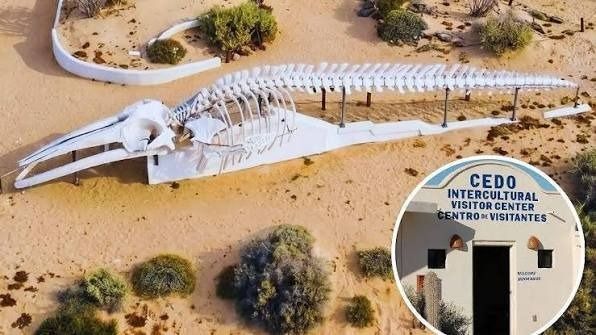
Located in the Las Conchas community, CEDO — the Intercultural Center for the Study of Deserts and Oceans — has spent decades helping visitors understand the extraordinary ecology of the northern Gulf of California and the surrounding Sonoran Desert.
Its campus has featured ecosystem exhibits, educational programs and its iconic fin whale skeleton, creating a natural bridge between what you see outdoors around Tessoro and the science behind it.
- Famous fin whale skeleton
- Desert and marine ecosystem exhibits
- Natural-history education and conservation programs
- EcoTours and field experiences may be available
Extreme Tides & Tide Pools
The northern Gulf of California is famous for its dramatic tidal range. At low tide, huge areas of shoreline and intertidal habitat can be exposed, revealing small marine worlds that disappear again as the water returns.
Rocky areas around Puerto Peñasco can reveal tide pools with snails, crabs and other intertidal life. Check tide conditions before exploring and leave shells, animals and habitat exactly where you find them.
- Check the tide before heading out
- Wear secure footwear on rocky or uneven surfaces
- Look closely, but avoid handling marine life
- Be aware of changing water conditions
The Desert, Estuary & Sea Are Connected
Tessoro's setting is unusual because several environments meet within a relatively small area, creating opportunities to experience nature in very different ways during the same stay.
Birdlife
Estuary flats and shallow water provide feeding habitat for shorebirds and other coastal species, particularly as changing tides expose new areas.
Sonoran Desert
The desert reaches almost to the shoreline, creating the striking contrast of arid landscape, dunes, wetlands and blue water that defines this part of Sonora.
Estuary Food Web
Mudflats and tidal waters support shellfish, small marine organisms and birds — and also the region's long-established oyster culture.
A Simple Seasonal Guide
Nature does not follow a reservation calendar, but these general patterns can help you know what to watch for.
Experience a Different Side of Rocky Point
Spend the morning watching the estuary change with the tide, visit CEDO, explore Las Conchas or plan a seasonal wildlife excursion — then return to the quiet eastern end of the beach at Tessoro.